Media Pembelajaran "KARJO SUWATRI"

Media Pembelajaran Karjo Suwatri digunakan sebagai media belajar Matematika khususnya Materi Trigonometri, penggunaan media yang cukup sederhana dan menggunakan cara belajar dengan bermain diharapkan agar siswa lebih tertarik untuk mempelajari Materi Pelajaran Trigonometri yang selama ini mungkin menjadi "momok" karena di rasa susah untuk dipahami.
Aturan Bermain :
1. Pemain berjumlah 2-4 Orang
2. Pemain harus menjodohkan antara pasangan dari kartu. Misalnya, sin 0 derajat harus dipasangkan dengan kartu bernilai 0, jika salah dalam menjodohkan maka pemain akan dikenai sanksi yaitu tidak bermain dalam 1 putaran
3. Pemenang dalam permainan ini yaitu pemain yang lebih cepat dalam menjodohkan semua kartu yang telah dibagikan.
4. Pemain yang kalah dalam permainan ini yaitu pemain yang memegang kartu terakhir yaitu kartu yang pasangannya ada di pos jomblo yang ada di tengah papan bermain.
Cara Bermain :
1. Pilih satu bandar untuk mengocok kartu agar kartu teracak.
2. Dalam keadaan tertutup secara acak pilih satu kartu untuk dijadikan kartu jomblo, letakkan kartu jomlo di tengah papan permainan.
3. bagi rata semua kartu yang tersisa kepada semua pemain secara acak
4. Pemain pertama bermain, dengan mencocokkan atau memasangkan antara kartu soal dengan kartu jawaban. Jika salah dalam memasangkan maka pemain tersebut dikenai sanksi yaitu tidak bermain selama 1 putaran.
5. Dilanjutkan kepada pemain kedua dan seterusnya. Jika kartu pada pemain sudah tidak ada yang bisa dipasangkan maka pemain tersebut mengambil 1 kartu dari lawan bermainnya secara acak.
6. Kartu yang sudah dipasangkan diletakkan pada kotak KUA yang ada di papan permainan.
7. Begitu seterusnya hingga kartu habis.
Review :
Permainan ini bisa menjadi media pembelajaran yang menarik untuk siswa karena mudah untuk digunakan. Permainan ini bisa menjadi salah satu solusi untuk siswa lebih memahami materi Pelajaran Matematika khususnya Trigonometri. Pada permainan ini siswa dituntut untuk mengerti beberapa trigonometri untuk sudut-sudut istimewa, karena jika salah dalam memasangkan maka siswa tersebut akan terlewat 1 putaran secara terus menerus yang berujung pada kekalahan terhadap lawan bermainnya yang terkadang akan membuat ia merasa bosan (karena selalu kalah) dalam permainan. Namun kepada siswa yang gigih dan mau untuk belajar maka ia akan termotivasi untuk lebih menghafal trigonometri sudut istimewa.
@darmadi.ism
Bagi beberapa anak, belajar matematika bisa dibilang rumit dan
membosankan. Pelajaran yang diterima anak di sekolah pun hanya berkutat
di papan tulis dan buku saja. Padahal orang tua pun menyadari bahwa
belajar matematika sangat penting untuk membantu anak belajar berpikir
secara sistematis dan terstruktur. Data yang dirilis oleh Program for International Student
Assessment (PISA) di bawah Organization Economic Cooperation and
Development (OECD) pada Desember 2013 lalu mengatakan kemampuan
matematika pelajar Indonesia berada di peringkat 64 dari 65 negara yang
di survei. Hal ini tentunya bisa dihindari jika belajar matematika
menjadi asyik dan menyenangkan.
Dikutip dari scholastic pada Jumat (3/1/2014), beberapa cara ini dipercaya dapat membuat belajar matematika menjadi menyenangkan.
1. Dadu Berwarna


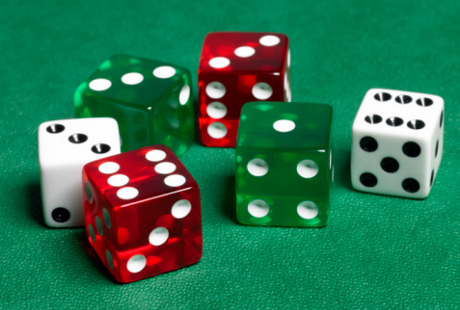
Dadu tidak hanya bisa digunakan dalam permainan monopoli atau ular tangga saja. Dadu juga bisa digunakan untuk belajar matematika!
Caranya mudah, pertama Anda harus mempunyai dua buah dadu atau lebih. Setelah itu Anda hanya perlu melempar dadu tersebut, lalu menghitung berapa jumlah mata dadu yang muncul. Jika anak Anda sudah sekolah, Anda dapat menggunakan dadu untuk belajar perkalian.
2. Perang Kartu


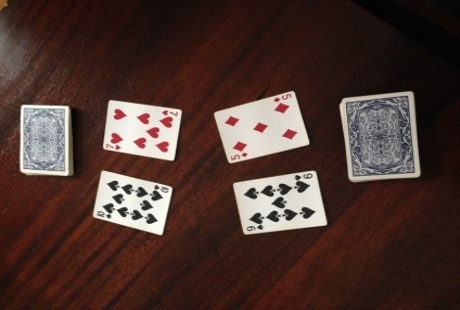 Perang kartu yang dimaksudkan disini bukan permainan 'gambaran'
atau kertu domino. Anda hanya membutuhkan satu set kartu remi untuk
melakukan hal ini.
Perang kartu yang dimaksudkan disini bukan permainan 'gambaran'
atau kertu domino. Anda hanya membutuhkan satu set kartu remi untuk
melakukan hal ini.
Bagi satu set kartu tersebut secara merata. Jika hanya bermain dengan anak Anda, Anda akan mempunyai masing-masing sebanyak 26 kartu. Letakkan tumpukan kartu di depan lalu pilih 4 kartu secara acak. Setelah itu, Anda tinggal menjumlahkan kartu yang ada, yang jumlahnya paling besar keluar sebagai pemenang. Permainan ini tidak terbatas pada penjumlahan saja, namun juga bisa digunakan untuk belajar pengurangan, perkalian atau pembagian.
3. Matematika Ular Tangga
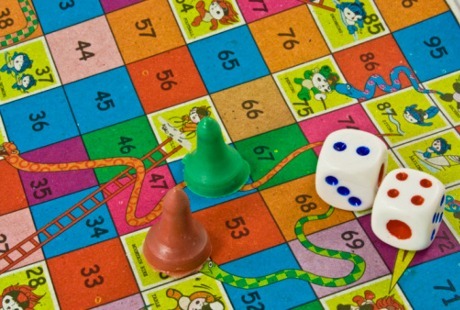
Ular Tangga adalah permainan yang lazim dilakukan oleh anak-anak.
Anda dapat sedikit memodifikasinya agar bisa digunakan sebagai sarana
belajar matematika seperti yang dicontohkan pada gambar. Pada
gambar dijelaskan bahwa ada kotak-kotak dengan ketentuan khusus.
Perintah seperti maju ke perkalian angka 5 atau mundur ke angka 4 bisa
membantu anak belajar mengingat angka sekaligus pertambahan atau
pengurangan.
4. Segitiga Fakta
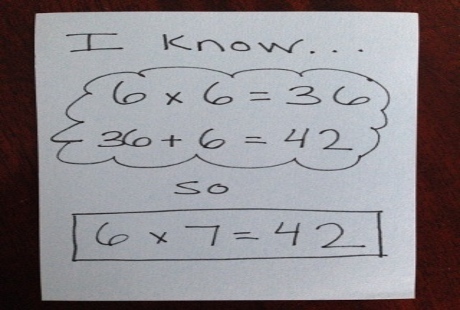
5. Kartu Saya Tahu
sumber : https://health.detik.com/read/2014/01/03/164243/2457847/764/begini-caranya-agar-belajar-matematika-jadi-menyenangkan-bagi-anak
Dikutip dari scholastic pada Jumat (3/1/2014), beberapa cara ini dipercaya dapat membuat belajar matematika menjadi menyenangkan.
1. Dadu Berwarna
Dadu tidak hanya bisa digunakan dalam permainan monopoli atau ular tangga saja. Dadu juga bisa digunakan untuk belajar matematika!
Caranya mudah, pertama Anda harus mempunyai dua buah dadu atau lebih. Setelah itu Anda hanya perlu melempar dadu tersebut, lalu menghitung berapa jumlah mata dadu yang muncul. Jika anak Anda sudah sekolah, Anda dapat menggunakan dadu untuk belajar perkalian.
2. Perang Kartu
Bagi satu set kartu tersebut secara merata. Jika hanya bermain dengan anak Anda, Anda akan mempunyai masing-masing sebanyak 26 kartu. Letakkan tumpukan kartu di depan lalu pilih 4 kartu secara acak. Setelah itu, Anda tinggal menjumlahkan kartu yang ada, yang jumlahnya paling besar keluar sebagai pemenang. Permainan ini tidak terbatas pada penjumlahan saja, namun juga bisa digunakan untuk belajar pengurangan, perkalian atau pembagian.
3. Matematika Ular Tangga
4. Segitiga Fakta
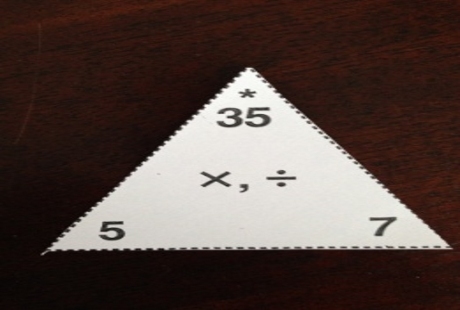
Metode ini bukan dimaksudkan untuk belajar tentang segitiga.
Metode ini dianjurkan untuk anak yang ingin belajar perkalian dan
pembagian. Caranya mudah. Anda tinggal menempatkan angka dan tanda kali
dan bagi seperti yang ditujukan pada gambar. Metode ini akan
mempermudah anak karena jika dibawa dan sering dihapal, dapat membantu
anak menguasai perkalian dan pembagian lebih cepat. Anda dapat membuat
sendiri segitiga ini bersama anak Anda.
5. Kartu Saya Tahu
Ini adalah cara ampuh untuk membantu anak Anda yang sering lupa
dalam perkalian. Kartu ini dapat dibuat dengan mudah dan juga dapat
dibuat dalam ukuran apapun. Anda dapat membuatnya dalam ukuran kecil
untuk dibawa anak atau besar untuk ditempel di kamar. Kartu ini
berisi tentang hal-hal yang sudah dipahami oleh anak Anda, namun sering
terlupa. Seperti dicontohkan pada gambar, mungkin anak sering lupa
berapa hasil 6 dikali 7.
Cara Belajar Yang Efektif

Belajar
pagi para siswa hingga mahasiswa adalah sebuah kewajiban sebagaimana predikatnya
sebagai pelajar. Pelajar yang baik tentunya harus belajar yang baik, belajar
yang baik adalah belajar yang menghasilkan peningkatan pengetahuan, sikap dan
atau keterampilannya. Namun apakah belajar Anda sebagai pelajar sudah efektif
dan efisien? Jika belum, mari simak 7 cara belajar yang efektif dan efisien
berikut:
1. Buat Suasana
Belajar yang Nyaman
Yang perlu Anda lakukan pertama adalah bagaimana
cara membangun suasana belajar yang nyaman. Ada banyak cara untuk membuat mood
belajar itu muncul, diantara: Anda bisa belajar sambil mendengarkan musik, belajar
di tempat-tempat yang nyaman misalnya di taman atau dipinggir danau, atau
diruangan ber-AC.
2.
Merangkum Pokok Pembelajaran
Yah, mencatat pokok-pokok pembelajaran. Kenapa?
Karena jika Anda membaca 1 buku maka akan butuh waktu yang sangat lama untuk
menyelesaikan. Ambilah intisari dari pelajar tersebut. Hal ini akan membuat kemudahan
mengingat dan juga mudah untuk memahami inti dari pembelajaran tersebut.
3. Belajar
Bersama
Metode ini seringkali di katakan metode yg paling
efektif karena dalam suasana belajar berkelompok yang cukup santai otak menjadi
lebih rileks menerima pelajaran/materi yang akan di serap. Selain itu hal-hal yang
belum di ketahui akan lebih mudah di selesaikan dengan bekerja sama. Maka
sangat dianjurkan untuk belajar bersama untuk menghadapi ujian.
4. Metode
mempersingkat atau memodifikasi menyerupai nama sesuatu
Metode ini digunakan bagi beberapa orang yang
kesulitan dalam menghafal dengan cara menggunakan nama-nama yang hampir mirip
untuk mengingat materi. Ini sangat efektif digunakan dan otak sangat mudah
mengingatnya.
5. Belajar
dengan Praktik
Belajar sambil praktek adalah hal yang sangat
efektif. Yah, Cara belajar ini juga akan membuat Anda tak merasa bosan.
Misalnya pelajaran IPA seperti Botani atau Avertebrata, kita bisa belajar
sambil mengamati tumbuh-tumbuhan, hewan atau apapun, dengan itu kita bisa
membuat sebuah acara belajar menjadi lebih asyik.
6. Belajar
rutin tapi jangan lama
Dengan rutin belajar Anda akan semakin mudah
untuk mengingat hal yang sudah Anda pelajari. yang perlu Anda lakukan adalah
"belajar rutin" bukan "Terlalu lama belajar". Seperti
belajar saat pagi 45 menit, siang 25 menit, sore 50 menit, malam 1 jam. Cara
ini sangat efetif dan pikiran juga akan tetap dalam keadaan rileks dari pada
harus belajar terlalu lama.
7. Mengerti
Bukan Menghafal
Yah, hal yg paling sering dilakukan oleh siswa
atapun mahasiswa ketika ingin menghadapi ujian adalah menghafal. Sebenarnya
tidak salah cuman kurang efektif. Untuk lebih efektifnya adalah mengerti
teorinya maka dengan sendiri akan kita ingat ketika ujian. Kalau Anda masih
dalam metode belajar dengan menghafal, sangat disarankan untuk pindah ke metode
mengerti materi.
UN merupakan ujian step terakhir dalam sebuah pendidikan, dimana
hasilnya akan menentukan lulus atau tidaknya para siswa dalam mencapai
studi yang telah ditetapkan. Sudah banyak tips-tips jitu yang diberikan
kepada para siswa sebelum mengikuti UN di sekolahnya masing-masing,
namun kali ini seputarpengetahuan.com akan membagikan tips-tipsnya dan
pastinya tidak jauh-jauh dari tips yang diberikan oleh orang tua, guru,
kepala sekolah ataupun orang-orang terkait demi kesuksesan para peserta
didiknya.

![]()
![]()
Nah itulah beberapa 10 Tips Sukses Menghadapi Ujian Nasional (UN). Semoga bermanfaat dan peserta didik yang akan menghadapu UN dapat diberi kemudahan dan kelancaran serta kesuksesan yang dihasilkan. Sekian terimakasih.
Tips Sukses Ujian Nasional
ada beberapa tips yang bisa diterapkan dan dipraktekkan untuk para peserta didik yang akan menghadapi UN. Berikut tips-tipsnya.1. Pelajari Latihan Contoh-Contoh Soal
Jangan biasakan belajar dengan menggunakan SKS (sistem kebut semalam). Besok Ujian, malamnya baru buka buku. Cobalah untuk mempersiapkannya jauh-jauh hari. Kumpulkan bekas-bekas soal ulangan, soal try out, buku-buku yang diperjualbelikan di toko-toko buku. Semakin banyak membaca dan mempelajari soal-soal latihan, maka dengan melakukan hal tersebut, maka akan terbiasa dan lebih relax dalam mengerjakan UN nantinya.2. Mengikuti kursus-kursus atau bimbel
Jauhkan rutinitas yang membuat Anda tidak konsen belajar, mintalah persetujuan orang tua untuk memasukkan Anda pada lembaga khusus yang menangani bimbingan belajar sesuai dengan kebutuhannya. Dalam bimbel yang diikuti, pasti akan mendapatkan kisi-kisi Ujian Nasional, maka pelajarilah dan terus dilatih, tanyakan apa yang belum dimengerti dan di pahami.3. Membuat catatan kecil
Ini merupakan salah satu tips jitu, cobalah lakukan langhkah ini. Yaitu membuat catatan kecil yang berkaitan dengan pelajaran yang masuk kedalam Ujian Nasional. Buatlah yang menurut Anda itu sulit dan membutuhkan pengulangan dalam mengingatnya. Setiap mata pelajaran satu catatan kecil yang bertuliskan beberapa point dan inti dari kisi-kisi UN yang menurut Anda sukar.4. Membuat jadwal rutin belajar
Diluar jam sekolah dan kursus-kursus, luangkan waktu dalam setiap harinya minimal 2-3 jam untuk belajar. Jika belajar dilakukan secara konsisten dari jauh-jauh hari sebelum waktu UN tiba, InsyaAllah kemungkinan berhasil lebih besar.5. Aktif didalam kelas
Gunakan waktu sebaik mungkin. Jika dalam mempelajari soal-soal di rumah atau sedang belajar mengalami kesulitan atau kurang paham, tanyakanlah kepada guru di dalam kelas. Banyak-banyak bertanya agar kesulitan-kesulitan yang dihadapi berkurang.6. Buatlah kelompok belajar
Teman-teman yang bisa diandalkan dalam setiap mata pelajaran bisa dijadikan alternatif untuk menambah motivasi dan semangat belajar. Buatlah kelompok belajar bersama teman-teman yang saling mendukung dan memotivasi.7. Menjaga kesehatan tubuh
Belajar dan terus belajar, namun tetap kondisi kesehatan tetap fit. Minumlah air putih sebanyak 2 liter dalam sehari dan minumlah vitamin-vitamin yang baik untuk kehatan tubuh dan otak.8. Istirahat yang cukup
Menjelang UN tiba, cukupkan waktu istirahat dengan tidur yang cukup. Jangan sampai disibukkan dengan tumpukan-tumpukan buku sebagai alas tidur. Setelah waktu istirahat dirasa cukup, bukalah kembali catatan kecil yang berisikan ringkasan-ringkasan mata pelajaran yang akan dihadapi.9. Jangan tegang
Hadapilah UN dengan slow but sure, santai aja tapi tetap serius dan pasti. Mengerjakan soal tidak perlu terburu-buru. Kerjakan dari soal termudah terlebih dahulu.
10. Banyak berdoa
Berdoa merupakan senjatanya orang mukmin atau beriman. Oleh karenanya, jangan lupa untuk terus berdoa agar selalu diberi kemudahan, kelancaran, tidak ada suatu halangan apapun dan semoga diberikan kesuksesan dalam mengerjakan soal.Nah itulah beberapa 10 Tips Sukses Menghadapi Ujian Nasional (UN). Semoga bermanfaat dan peserta didik yang akan menghadapu UN dapat diberi kemudahan dan kelancaran serta kesuksesan yang dihasilkan. Sekian terimakasih.
Pelaksanaan UN SMP, SMA dan SMK tahun 2017
Setelah gonjang-ganjing ketidakpastian pelaksanaan UN tahun pelajaran 2016/2017 ini beberapa saat yang lalu, akhirnya diputuskan oleh pimpinan tertinggi Republik kita, Bapak Joko Widodo UN tahun 2017 ini tetap dilaksanakan. Tentang jadwal UN 2017 kapan dilaksanakan, berikut saya bagikan jadwal lengkap UN untuk SMP, SMA, dan SMK tahun pelajaran 2016/2017 yang dikutip dari website resmi Kementerian Pendidikan Indonesia; kemdikbud.go.id.Jadwal UN SMP, SMA dan SMK tahun 2017
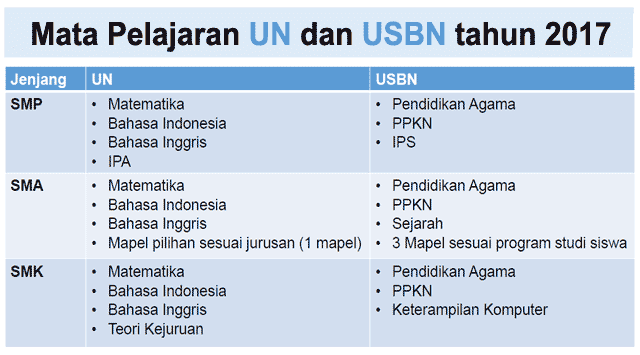 |
| Mapel yang diujikan pada UN dan USBN SMP, SMA, dan SMK tahun 2017 |
Beberapa hal yang perlu diketahui tentang pelaksanaan UN dan USBN tahun 2017:
Kebijakan tentang Ujian Nasional dan Ujian Sekolah 2017
- Ujian Nasional tetap dilaksanakan.
- Ujian Sekolah ditingkatkan mutunya menjadi USBN 2017 (Ujian Sekolah Berstandar Nasional) untuk beberapa mata pelajaran.
- Memperluas pelaksanaan ujian berbasis komputer, baik UN maupun USBN.
sumber : http://un.kemdikbud.go.id/un-2017/
CHAPTER
I
INTRODUCTION
1.1 Journal
THE POWER OF GAMES TO
LEARN MATHEMATICS
Ariyadi Wijaya
Mathematics Education Department, Yogyakarta State University
(ariyadiwijaya@hotmail.com; a.wijaya@uny.ac.id)
Abstract
The central
principle of Realistic Mathematics Education is that the learning of mathematics
needs to be laid on meaningful situation; either meaningful problems or activities.
Many research found that activities of game playing are meaningful to students
and can be effective tools for enhancing learning and understanding of complex subject
matter. Consequently, this article focuses on the benefit of games to support
the learning of mathematics and the role of teacher in conducting game-based
learning.
Keywords :
Realistic Mathematics Education, game-based learning, the role of teacher
INTRODUCTION
Many mathematics
concepts are directly taught as an isolated concept at the formal level of young
children (Castle & Needham, 2007; Kamii & Clark, 1997 and van de Walle
& Folk, 2005). Teaching and learning of mathematics mostly focuses on the algorithm
or procedure to solve problems at formal level of mathematics. However, in fact
young children have difficulty in understanding the concepts of mathematics in
the formal level (Van de Walle & Folk, 2005). Consequently, it is important
not to start the teaching and learning process of mathematics from formal
level. Freudenthal viewed mathematics as human activity, instead as subject
matter that must be transferred from teachers to students (Freudenthal, 1991).
This view underlies the development of Realistic Mathematics Education (RME).
The central principle
of RME is that mathematics should be meaningful to students. The meaningful
mathematics can be achieved by giving contextual problem as the starting point
of the teaching and learning. The term “realistic” in RME does not mean that
the problems have to be encountered in daily life, but it means that the problems
should be experientially real for student. In the process of teaching and learning,
students should be allowed and encouraged to invent their own strategies and
ideas. However, the different strategies and ideas of students have to be led
to the formation of mathematics concepts as the final goal of the teaching and
learning process.
The foundation of
mathematics education in kindergarten and elementary school needs to be laid on
doing meaningful activities or experiences, through which a connection is made
between informal knowledge and the formal concepts of mathematics (Buys &
de Moor, 2005 and Castle & Needham, 2007). Consequently, it is important to
give young children experience-based activities that embody some basic concepts
of mathematics. Experience-based activities are relevant with Freudenthal’s
idea that stresses mathematics as a human activity, instead of subject matter
that has to be transmitted (Freudenthal, 1991). Freudenthal (ibid)
proposed the need to connect mathematics to reality through problem situation
because experience-based activities could contribute to the emerging of
mathematical practices. For young children, game playing could be a problem
situation, which is experientially real for them and, therefore, can be used as
a starting point for their learning process. Game playing can form a natural part
of the experience-based and development-focused activities for the teaching and
learning of mathematics. In Indonesia, there are some (traditional) games that,
without any consideration, embody mathematics concepts. Consequently, the
central issue of this article is the use of games (especially Indonesian
traditional games) as experience-based activities for teaching and learning of
mathematics.
REALISTIC MATHEMATICS EDUCATION
Realistic Mathematics
Education was underlined by the idea of Hans Freudenthal that viewed
mathematics as human activity, instead as subject matter that must be transferred
from teachers to students (Freudenthal 1991). Based on Freudenthal’s idea, the
teaching and learning process of mathematics should be connected to contextual problems
that experientially real for students. In spite of the use of contextual
problem, the teaching and learning process should lead to the formation of
mathematical concepts through the process of mathematization. There are five
tenets of realistic mathematics education defined by Treffers (1987), namely:
1.
Phenomenological
explorationContextual problems are used
as the base and starting point for the teaching and learning process. The
teaching and learning process is not started from formal level but from a situation
that is experientially real for student.
2.
Using models and symbols for progressive mathematization
The aim of this tenet is bridging from
concrete level to more formal level using models and symbols.
3.
Using students’ own construction
The freedom for students to use their
own strategies could direct to the emergence of various solutions that can be
used to develop the next learning process. The students’ strategies in the
activities are discussed in the following class discussion to support students’
acquisition of the formal level of mathematics concepts
4.
Interactivity
The learning process of students is not merely an individual process, but it is also a social process. The learning process of students can be shortened when students communicate their works and thoughts in the social interaction emerged in classroom.
The learning process of students is not merely an individual process, but it is also a social process. The learning process of students can be shortened when students communicate their works and thoughts in the social interaction emerged in classroom.
5.
Intertwinement
The activities used in the teaching and learning process do not merely support learning for a single mathematics topic, but they also should support the learning process of other mathematics topics or concepts.
The activities used in the teaching and learning process do not merely support learning for a single mathematics topic, but they also should support the learning process of other mathematics topics or concepts.
GAME-BASED LEARNING
Learning occurs when
students process new information or knowledge in such a way that it makes sense
to them. In a supporting environment, students can discover meaningful
relationships between contextual problem situation and abstract ideas that will
lead to the process of internalization of concepts through the process of (guided)
reinventing, reinforcing, and connecting. However, student need attractive
contextual situation as the starting point of their learning process. Games can
be powerful and attractive contextual situation for students because one of the
natural characteristics of a
game playing is that it uses more action instead of word explanation. This characteristic will stimulate students’ personal motivation and satisfaction in the learning process. Hence, games can encourage attractive and active learning in which students are more active in their learning process (Garris, Ahlers, & Driskell, 2002).
game playing is that it uses more action instead of word explanation. This characteristic will stimulate students’ personal motivation and satisfaction in the learning process. Hence, games can encourage attractive and active learning in which students are more active in their learning process (Garris, Ahlers, & Driskell, 2002).
The other
characteristic of game playing that can benefit and support the teaching and
learning process is that many games are played in teams or groups. The teamwork
created in a game playing can foster collaboration and interactivity among
students (Kaptelin & Cole, 2002 and Sheffield, 2005). Furthermore, this
characteristic can accommodate multiple learning styles and skills of students.
Ricci, Salas & CannonBowers (1996) and Sheffield (2005) found that game
playing can reinforce mastery skills of students because game playing is
effective tool for enhancing learning and understanding of complex subject
matter. As an example is how Indonesian traditional games (i.e. benthik and
gundu) can support second graders’ learning of linear measurement (Ariyadi
Wijaya, 2008).
Despite the
aforementioned benefits of games in education, the use of games in the teaching
can learning process cannot stand alone or independent. The games need to be
followed by discussion in which the values and/or contents of the game are
directed to the formation of mathematics concept. It is in line with the
principles of experiential learning that was developed by Kolb. Kolb mentioned
four stages of experiential learning, namely: (1) concrete experience, (2)
reflective observation, (3) abstract conceptualization, and (4) active
experimentation (Kolb, 1984). Game playing serves as a concrete experience in
which students can develop strategies to solve problem-based game. The game playing is used as the base
for the observations and reflections that transform experiences into abstract
concepts. The strategies developed by students are directed to the formation of
mathematics concepts in the process of reflective observation and abstract
conceptualization. Active experimentation in the game-based learning can be the
application of mathematics concept formed in the reflective and abstract conceptualization
stage.
GAMES FOR MATHEMATICS LEARNING
The following are
examples of game that can be used in the learning of
mathematics concepts:
mathematics concepts:
1.
Gundu
The mathematics concepts embodied in the first part of Gundu game, namely when determining the order of the players. In this part all players have to throw their marble to a given hole or pole. The first player is a player whose marble is the nearest to the hole or pole.
Students can use two strategies when determine the nearest marble, namely by comparison (when the different distances of the marbles is obvious to observe) and measurement (for the close distances).
The mathematics concepts embodied in the first part of Gundu game, namely when determining the order of the players. In this part all players have to throw their marble to a given hole or pole. The first player is a player whose marble is the nearest to the hole or pole.
Students can use two strategies when determine the nearest marble, namely by comparison (when the different distances of the marbles is obvious to observe) and measurement (for the close distances).
2.
Dakon or congklak
Dakon
is a game that is played by two players and each player has a big hole as “a deposit
hole” and some small holes (the number of small holes depends on the type of
dakon). There are three versions of Dakon or Congklak, namely dakon with 10
holes, 12 holes and 16 holes. For the 10 holes dakon, there are 32 seeds or beads
that should be put in the small holes at the beginning of the game (4 seeds or
beads for each small hole). For the 12 holes dakon, there are 50 seeds or beads
that should be put in the small holes at the beginning of the game (5 seeds or beads
for each small hole). For the 16 holes dakon, there are 98 seeds or beads that
should be put in the small holes at the beginning of the game (7 seeds or beads
for each small hole).
The mathematics concepts embodied in Dakon game are counting and division. The counting emerges when students distribute the seeds or beads and count the final result in the “deposit hole”. At the beginning of the game, each player has to distribute his/her seeds or beads in the small holes equally. The concept of division can be developed when the teacher change the rule of the game and giving various numbers of seeds or beads to students.
The mathematics concepts embodied in Dakon game are counting and division. The counting emerges when students distribute the seeds or beads and count the final result in the “deposit hole”. At the beginning of the game, each player has to distribute his/her seeds or beads in the small holes equally. The concept of division can be developed when the teacher change the rule of the game and giving various numbers of seeds or beads to students.
3.
Ular tangga
In
Ular tangga game, the players have to throw a die and then move their pin in the
numbers of steps as shown by the top of the die. When a player’s pin stops at a
stair, the player can directly “jump up” the pin to the top edge of the stair.
On the other hand, a player has to “jump down” his/her pin to the head of snake
when his/her pin stops at the tail of a snake. The winner of the game is the
first player who arrives at number 100 as the final destination. Mathematics
concepts that are embodied in Ular tangga are counting, addition and subtraction.
The counting (i.e. counting one by one) emerges when a player/student moves
his/her pin step by step. Addition concept emerges when a player does not move
his/her pin step by step, but he/she adds the number shown by the die to the
current position of the pin. Addition concept can be focused or emphasized by
asking students about how many steps they get as an advantage when they get a
stair. On the other hand, the disadvantage when students meet a snake can be used
to emphasize the concept of subtraction.
THE ROLE OF TEACHER IN
THE GAME-BASED LEARNING
Game playing provides a natural situation for social interaction,
such as students’ agreement in deciding a strategy for the fairness of their
games (Ariyadi Wijaya, 2008). Interactivity as the fourth tenet of RME
emphasizes on students’ social interaction to support individual’s learning
process. The learning process of students is not merely an individual process,
but it is also a social process that both perform simultaneously (Cooke &
Buchholz, 2005; Lave & Wenger, 1991 in Lopez & Allal, 2007; Michelle
& Cobb, 2003 and Zack & Graves, 2002). The learning process of students
can be shortened when students communicate their works and thoughts in the social
interaction both in game playing and class discussion. As mentioned earlier,
game playing needs to be supported by a class discussion to develop students’
concrete experiences into mathematical concepts. Consequently, in the class
discussion the teacher plays an important role in orchestrating social
interaction to reach the objectives both for individual and social learning
(Cooke & Buchholz, 2005 and Doorman & Gravemeijer, in press). The roles
of teacher in the class discussion can be elaborated in the following manners:
1.
Providing students opportunities to present ideas
According
to the third tenet of RME, it is important to start the class discussion by using
students’ own construction, such as students’ strategies. The teacher,
as the orchestrator of class discussion, should stimulate students to present
their ideas as the starting point of class discussion.
2.
Stimulating social interaction
According
to Vigotsky in Zack & Graves (2001), social interaction is the core of learning
process because learners first construct knowledge in their interaction with people
and activity or context. Therefore, a teacher should be a good orchestrator in
provoking students’ social interaction. The teacher could provoke social
interaction by either making groups of students or asking questions. Generating
micro discussions in a macro discussion in the class discussion can be the
first step to stimulate the students to share and discuss their strategies. The
second strategy for stimulating social interaction is by posing appropriate
questions.
3.
Connecting activities
In
supporting students’ learning, it is important for the teacher to help children
communicate and develop their ideas by elaborating upon what they already know.
An example of this manner is when the teacher encourages students to perceive
the concept of measuring as covering.
4.
Eliciting the mathematical concepts
The
most important objective of a class discussion is transforming students’ concrete
experiences into mathematical concepts as mentioned by Cooke & Buchholz
(2005) and Kolb in de Freites & Oliver (2006). Transforming a concrete
experience into a mathematical concept can be facilitated by posing stimulating
problem or conflict.
5.
Asking for clarification
Asking
for clarification is important for the learning process because it can investigate
students’ reasoning about their idea or strategies that could reveal both difficulty
and achievement in students’ learning process. The following vignette is an
example of a critical part in a student’s learning process that was revealed
through asking clarification (Ariyadi, 2008).
Dea : No.
We should start from number “1”
Teacher :
Why do we start from number “1”?
Dea :
Because zero is nothing
The
teacher’s question is a kind of question for asking clarification and
reasoning. From Dea’s response, it seemed that Dea was still confused between
measuring and counting object (cardinality). Therefore, from this invention the
teacher could know which part of the learning process that should be developed.
Another advantage of asking clarification is when students’ reasoning gives information
about the strength of particular methods or strategies that could support
students’ learning process.
As a
summary, by asking clarification we can know how a weakness of some students’ progress
could be diminished by providing a proper guidance. How the strength of
particular methods or strategies offer an opportunity to develop students’
learning process also can be found by asking clarification.
CONCLUSIONS
In
general, the use of game playing in learning mathematics can give three
benefits, namely: (1) motivational benefit, (2) social benefit and (3)
conceptual benefit. Attractive is the characteristic of game playing that lead
to the first benefit, motivational benefit. The attractivity of game playing
can stimulate students’ personal motivation and satisfaction in the learning
process. Many games are played in groups or at least in pairs, therefore games
can give social benefit. Teamwork or at least communication created in a game
playing can foster collaboration and interactivity among students. The last
benefit, conceptual benefit, means that game playing can be an effective tool
for enhancing learning and understanding of mathematics concepts.
REFERENCES
Ariyadi
Wijaya. 2008. Indonesian Traditional Games as Means to Support Second Graders’
Learning of Linear Measurement. Master Thesis. Utrecht: UtrechtUniversity.
Castle,
K. & Needham, J. 2007. First Graders’ Understanding of Measurement. Early
Childhood Education Journal. Vol. 35: 215 – 221.
Doorman,
L.M. & Gravemeijer, K.P.E. in press. Emergent modeling: discrete graphs to support
the understanding of change and velocity. ZDM Mathematics Education.
Freudenthal, H. 1991. Revisiting Mathematics Education: China Lectures.
Dordrecht, The Netherlands: Kluwer Academics Publisher.
Garris,
R., Ahlers, R., & Driskell, J. E. 2002. Games, motivation, and learning: A research
and practice model. Simulation & Gaming, 33(4), 441–467.
CHAPTER II
ANALYSIS JOURNAL
2.1 Background
Thecentral
principle of Realistic Mathematics Education is that the learning of
mathematics needs to be laid on meaningful situation, either meaningful problems
or activities. Many research found that activities of game playing are
meaningful to students and can be effective tools for enhancing learning and
understanding of complex subject matter. Consequently, this article focuses on
the benefit of games to support the learning of mathematics and the role of teacher
in conducting game-based learning.
2.2
Research Question
How the benefit of games to support
the learning of mathematics and the role of teacher in conducting game-based
learning ?
2.3 Purpose
The purpose of journal is :
1.
To know the benefit of games to
support the learning of mathematics
2.
To know the role of teacher in
conducting game-based learning
2.4 Research Method
1.
Experiments with direct approach
to student
2.
Understanding of mathematics
learning method of experts
2.5
Research Result
A.
Tenets of realistic mathematics education
There are five tenets of realistic mathematics
education defined by Treffers (1987), namely:
1.
Phenomenological
explorationContextual problems are used
as the base and starting point for the teaching and learning process. The
teaching and learning process is not started from formal level but from a situation
that is experientially real for student.
2.
Using models and symbols for progressive mathematization
The aim of this tenet is bridging from
concrete level to more formal level using models and symbols.
3.
Using students’ own construction
The freedom for students to use their
own strategies could direct to the emergence of various solutions that can be
used to develop the next learning process. The students’ strategies in the activities
are discussed in the following class discussion to support students’ acquisition
of the formal level of mathematics concepts
4.
Interactivity
The learning process of students is not merely an individual process, but it is also a social process. The learning process of students can be shortened when students communicate their works and thoughts in the social interaction emerged in classroom.
The learning process of students is not merely an individual process, but it is also a social process. The learning process of students can be shortened when students communicate their works and thoughts in the social interaction emerged in classroom.
5.
Intertwinement
The activities used in the teaching and learning process do not merely support learning for a single mathematics topic, but they also should support the learning process of other mathematics topics or concepts.
The activities used in the teaching and learning process do not merely support learning for a single mathematics topic, but they also should support the learning process of other mathematics topics or concepts.
B.
Game-based learning
Games can be powerful and attractive
contextual situation for students because one of the natural characteristics of
a game playing is that it uses more action instead of word explanation. This
characteristic will stimulate students’ personal motivation and satisfaction in
the learning process.
C.
Games for mathematics learning
The following are
examples of game that can be used in the learning of
mathematics concepts:
mathematics concepts:
1.
Gundu
The mathematics concepts embodied in the first part of Gundu game, namely when determining the order of the players. In this part all players have to throw their marble to a given hole or pole. The first player is a player whose marble is the nearest to the hole or pole.
Students can use two strategies when determine the nearest marble, namely by comparison (when the different distances of the marbles is obvious to observe) and measurement (for the close distances).
The mathematics concepts embodied in the first part of Gundu game, namely when determining the order of the players. In this part all players have to throw their marble to a given hole or pole. The first player is a player whose marble is the nearest to the hole or pole.
Students can use two strategies when determine the nearest marble, namely by comparison (when the different distances of the marbles is obvious to observe) and measurement (for the close distances).
2.
Dakon or congklak
Dakon
is a game that is played by two players and each player has a big hole as “a deposit
hole” and some small holes (the number of small holes depends on the type of
dakon). The mathematics concepts embodied in Dakon game are counting and
division. The counting emerges when students distribute the seeds or beads and
count the final result in the “deposit hole”. At the beginning of the game,
each player has to distribute his/her seeds or beads in the small holes
equally. The concept of division can be developed when the teacher change the
rule of the game and giving various numbers of seeds or beads to students.
3.
Ular tangga
Mathematics
concepts that are embodied in Ular tangga are counting, addition and subtraction.
The counting (i.e. counting one by one) emerges when a player/student moves
his/her pin step by step. Addition concept emerges when a player does not move
his/her pin step by step, but he/she adds the number shown by the die to the
current position of the pin. Addition concept can be focused or emphasized by
asking students about how many steps they get as an advantage when they get a
stair. On the other hand, the disadvantage when students meet a snake can be used
to emphasize the concept of subtraction.
D.
The role of teacher in the
game-based learning
Game playing provides a natural situation for social interaction,
such as students’ agreement in deciding a strategy for the fairness of their
games (Ariyadi Wijaya, 2008). Interactivity as the fourth tenet of RME
emphasizes on students’ social interaction to support individual’s learning
process.
The roles of teacher in the
class discussion can be elaborated in the following manners:
1.
Providing students
opportunities to present ideas
2.
Stimulating social
interaction
3.
Connecting activities.
4.
Eliciting the mathematical
concepts
5.
Asking for clarification
BAB III
CONCLUSION
3.1 Suggestion
In general, the use of game playing
in learning mathematics can give three benefits, namely :
1.
Motivational benefit
2.
Social benefit
3. Conceptual benefit
Attractive
is the characteristic of game playing that lead to the first benefit,
motivational benefit. The attractivity of game playing can stimulate students’
personal motivation and satisfaction in the learning process. Many games are
played in groups or at least in pairs, therefore games can give social benefit.
Teamwork or at least communication created in a game playing can foster
collaboration and interactivity among students. The last benefit, conceptual
benefit, means that game playing can be an effective tool for enhancing
learning and understanding of mathematics concepts.
REFERENCES
Ariyadi
Wijaya. 2008. Indonesian Traditional Games as Means to Support Second Graders’
Learning of Linear Measurement. Master Thesis. Utrecht: UtrechtUniversity.
Castle,
K. & Needham, J. 2007. First Graders’ Understanding of Measurement. Early
Childhood Education Journal. Vol. 35: 215 – 221.
Doorman,
L.M. & Gravemeijer, K.P.E. in press. Emergent modeling: discrete graphs to support
the understanding of change and velocity. ZDM Mathematics Education.
Freudenthal, H. 1991. Revisiting Mathematics Education: China Lectures.
Dordrecht, The Netherlands: Kluwer Academics Publisher.
Garris,
R., Ahlers, R., & Driskell, J. E. 2002. Games, motivation, and learning: A research
and practice model. Simulation & Gaming, 33(4), 441–467.


